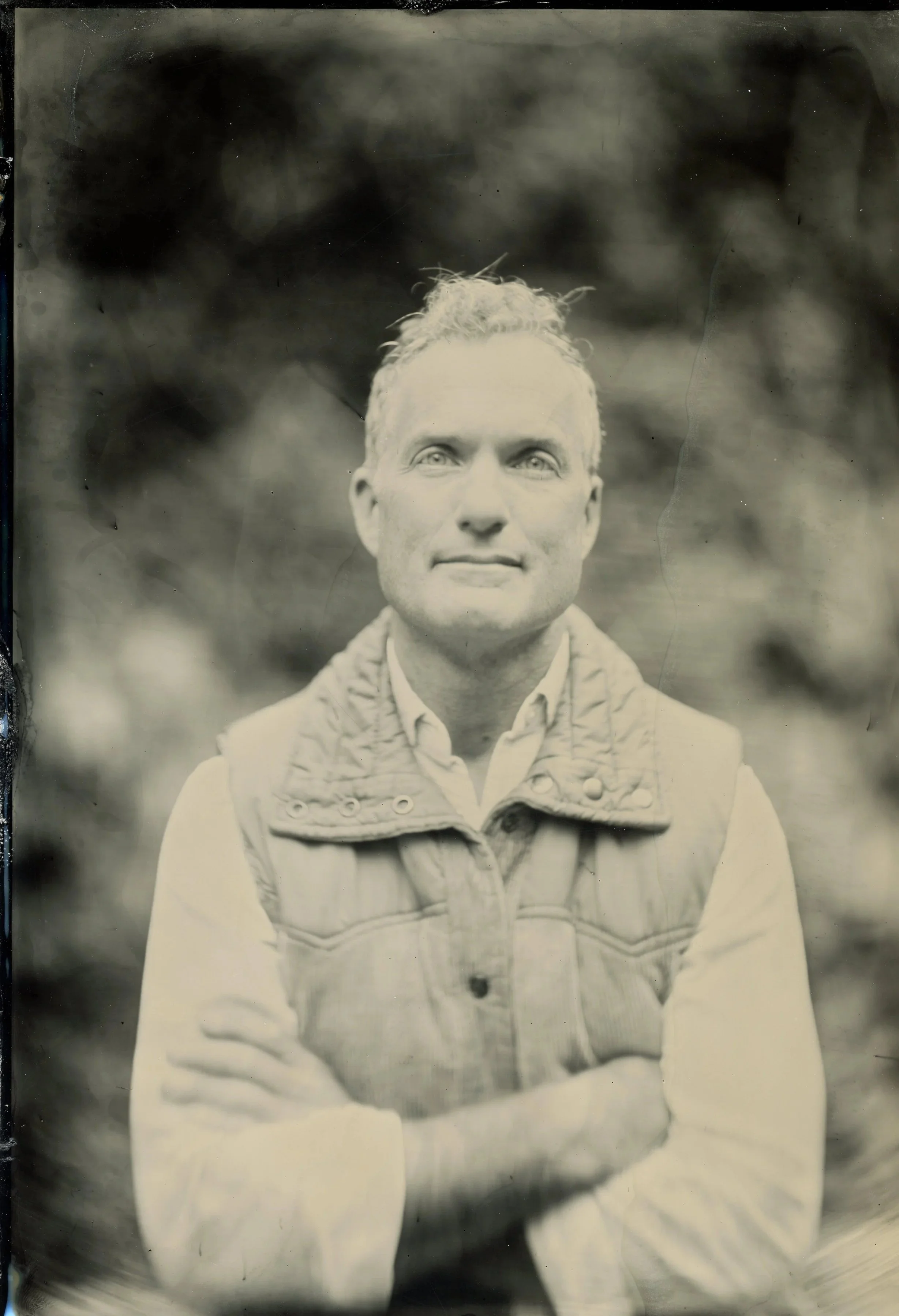
Recording an Unmade World—Interview with Josh Weil
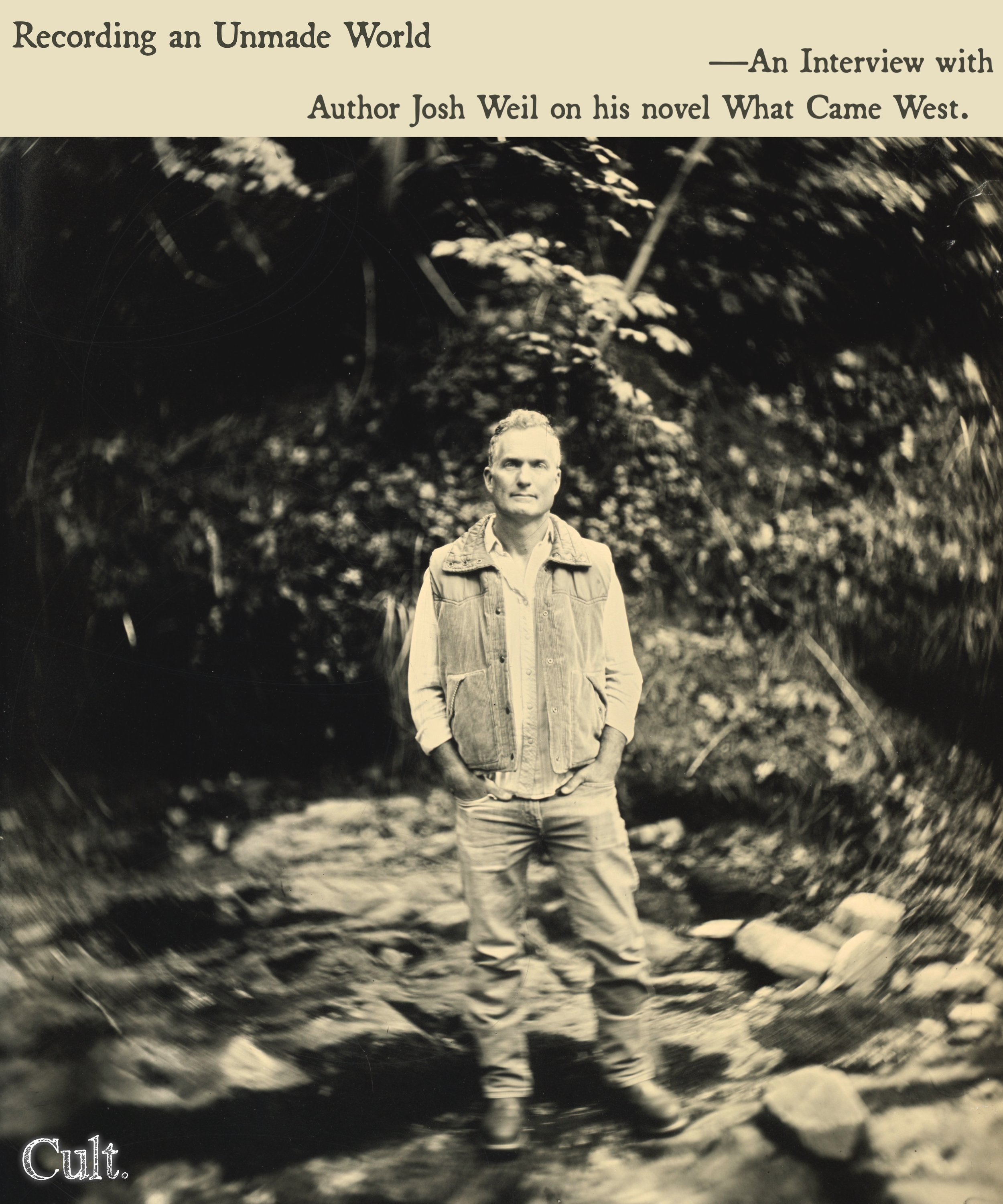
I first came upon Josh Weil’s writing in 2012 as a college sophomore back home for Thanksgiving break. On the mildewy shelves of the Reston Public Library, I found The New Valley, Weil’s debut novella collection featuring men of the West Virginian backcountry. I was enraptured by his patient prose, the nuanced emotionality, and the thick linguistic flesh of the characters.
A few years later in 2015, he published (to much acclaim) the speculative novel The Great Glass Sea: a prescient fable juxtaposing Russian folklore and tech oligarchism. Now, with his second novel, Weil traverses the wilderness in What Came West: an epic yet intimate portrait of the California Gold Rush that is also a compelling meditation on a time when neurodivergence meant isolation and pariah.
Silas Hall is Weil’s so-called Man of the Wilderness, and though the Wild Hermit is a common trope among American Westerns, he is anything but conventionally drawn. Silas is autistic, unable to fit in with the so-called civilized world. As a result, he takes refuge in the natural world, which gives him a sense of peace, and he will preserve his tranquility by any means.
In the opening chapter, he murders a group of prospectors encroaching upon the Sierra Nevada in 1849—about a year into the Gold Rush. The novel’s chapters alternate between the manhunt for Silas and this flowing, frantic, and confessional letter he writes to his son Elisha, whom he abandoned at only three years old.
The novel’s language embeds you. You’re fully immersed in a now-unmade world scorched by greed, hatred, and ego. A world Weil tries to preserve through language, so it may serve as a relic and a lesson. The novel is an elegy for what colonialism and capitalism have done to the land and its indigenous people—all because some shiny rocks were found by a river. What Came West serves as a harsh reality check on the consequences blown by the American Zephyr where, through manifest destiny, no one knows peace.
I spoke with Josh Weil about how this novel came to be.
So many Westerns like those from Larry McMurtry, Charles Portis, and Cormac McCarthy have this white American perspective of going West and staking a claim, whether that is in favor of manifest destiny or through a critical lens. Would you consider this novel to be a deconstructed Western or something that breaks from the framework of what we consider to be an American Western?
I think, like most complex works of literature or art, it's probably a mixture of those things. It doesn't fall completely into one camp or the other. I came to the Western having romanticized it myself as a kid, and loved the West and loved reading Westerns. I love the McMurtry books and, of course, McCarthy, so I think they’re embedded in the book's DNA.
But at the same time, I think the book winds up being written from the viewpoint of the natural world itself, from the place that was being invaded. That wasn't necessarily something I set out to do. But following the character [Silas], he’s fleeing the Western world. I think the book allows for some of the classic movement of a white guy moving West, who crosses into the mountains and winds up settling there, but it’s not framed in the same way. The world Silas finds is one that exists before he's there. It's almost like he is the object being observed by that world instead of the observational lens coming from the white man upon that world.
You say [Silas] is the one being observed by the natural world. He's still a foreigner, though. How did you get away from the trope of the white savior, white barbarian, or white interloper?
I mean, it's really tricky. It genuinely is because I can only write from a character whom I have both an ability to write from, to really get in their head, and a right to. In some ways, I'm stuck within that viewpoint. It’s especially important that the native characters, the natural world itself, and even the non-human characters’ stories are seen outside of Silas. Their stories don't rely on the needs of his story. I wanted the Nisenan [tribe] to exist fully fleshed out.
No Rope, the chief of the nearby village, has his own concerns. The way he views Silas is from his own needs and from his tribe's needs, and not necessarily in service to Silas's story. I very much wanted to make sure that was present in order to get away from some of those tropes.
I think the other thing that hopefully helps is that Silas fits so poorly in the white world, in the world of the East, the society of the Western world. That allows him to be, I think, less representative of it. He's fleeing it. There's one point where he talks about how he really doesn't fit well among people [at all]. It's not like, Oh, all of a sudden, Silas finds his place as this white interloper or savior or whatever among the Nisenan. They reject him as well. There's one point later in the book where he's talking about the natural world itself having left a kind of missing puzzle piece for his shape as the human animal. A place where he slots into the thing he's been searching for all his life. In the end, it’s not really about a white man coming into the indigenous world, but a human coming into a natural world, a human that doesn't fit with other humans, and that's his great sadness.
Silas's inability to fit within the colonized world as well as the soon-to-be-colonized and genocided world of the Nisenan has very much to do with his neurodivergence. From a social standpoint, he’s unable to interact with anyone, especially during a time wholly unequipped to deal with people like him.
Of course.
Yet his going West, fleeing his responsibility as a father, and committing murder against the prospectors…none of that, especially the murders, seems to come out of morality. More people coming to Sierra Nevada was bad for him, so he kills them. That is an inherently selfish act. Would you say a corner of Silas’s character embodies the philosophy of manifest destiny?
Oh, for sure. I think it’s definitely there. It has to be. He's of that world, of that time. And as he recognizes it in a defensive way, he's reluctant to fully embrace it. But he recognizes that he's the spearhead of what comes and ruins his world in very real ways. He's the way the rest of the world gets in. It’s one of the larger tragedies in the book.
[The killings] are absolutely a selfish act. When he commits the murders, he’s not really thinking as though he’s protecting the land. Because of his flaws and his neurodivergence, it’s just the way his mind works. I feel like the murders are something he has to do. That it comes from a need in him that isn’t intellectualized.
Then I ask the reader to empathize with him, which, I think, is a real challenge. A challenge I wanted to give myself in writing the book. He does later, I think, come to an understanding of maybe why he did that in a wider scope. He comes to believe the world that accepted him would want him to commit these actions. To be this kind of delayer of destruction. If he gives it another day, another month, another season, he's paying the world back for the gift it gives him. He does intellectualize the act later on, but the initial action is very much something he can't help but do out of desperation.
And that seed appears when he’s writing to his son about the first time he got truly violent with his family. When they try cutting down an elm tree near their home, he almost kills someone. At a base level, it makes sense. If you were threatened with your existence being extinguished, you'd want to continue in any way. It's a natural inclination. But I think that is a way for him to justify his violence, even though there's great shame in it.
He recognizes the consequences, but I’m not sure shame is even the right word. Regret, I guess. Certainly in leaving his son and abandoning his family. It begs the question an author must ask himself: Do I agree with the character or not?
I think, in this instance, I mostly do, but of course it's not so black and white. What I mean here is he's desperate to convince his son through this letter that he became a sane and healthy person through his finding a world that allows him to be. In that way, it kind of takes the onus off him to say, Hey…look…I did all these things. I was a terrible father. I acted the way I did because of what the world put upon me, and I didn't fit in. But the only way I could become a man who would have been someone you would’ve wanted as a father…was to leave you.
Silas feels he had to do this, or it would’ve gone badly. There's this great flaw because he commits these murders, even though supposedly he's this renewed man. Before he kills the prospectors, he goes through a period of breaking, experiencing an emotional need to do this act, but by the time he commits the murders, he comes out the other side whole in a way he wouldn’t have been before settling in the natural world. That somehow makes it worse, because then he follows through with the murders in an intellectualized way, thinking he’s protecting this world.
When he's a child, or even later when he's getting into fights, he goes through a kind of blacking out, where he’s distraught and enraged and becomes violent, but doesn't really remember details about what happened. That's not the case with the murders. He knows it step by step. I do think that makes it challenging both to empathize and pin Silas down as a character, which I’m always trying to do. It's very important to me that I try to get away from any kind of easy take on somebody's actions.
I believe you said in an interview regarding The New Valley that where you reside has a deep impact on what and how you write. You now live in the foothills of the Sierra Nevada. What was the impetus for setting the novel there? Was it just proximity?
I think the specifics of the book come very much from being in the region. But the kind of larger emotional, characterological concerns, those have been stirring in me for a long time. You're absolutely right. My writing has always been rooted in place. Unfortunately, because it's really limiting, I see it as a crutch.
I feel like I've got to be living in the region I'm writing about, which is kind of bull. You know how many people live in Paris and write about the U.S. or whatever?
But for me, there's something about being in the spot itself where I'm gazing out the window, and something will affect me. I'm going about my life. I'm going for a run. I'm taking my kid out to the river. I'm in that world. I've tried writing outside it. There’s this short novel I'm working on now that’s set in Russia and Ukraine in the 1700s. I'm not going there, right?
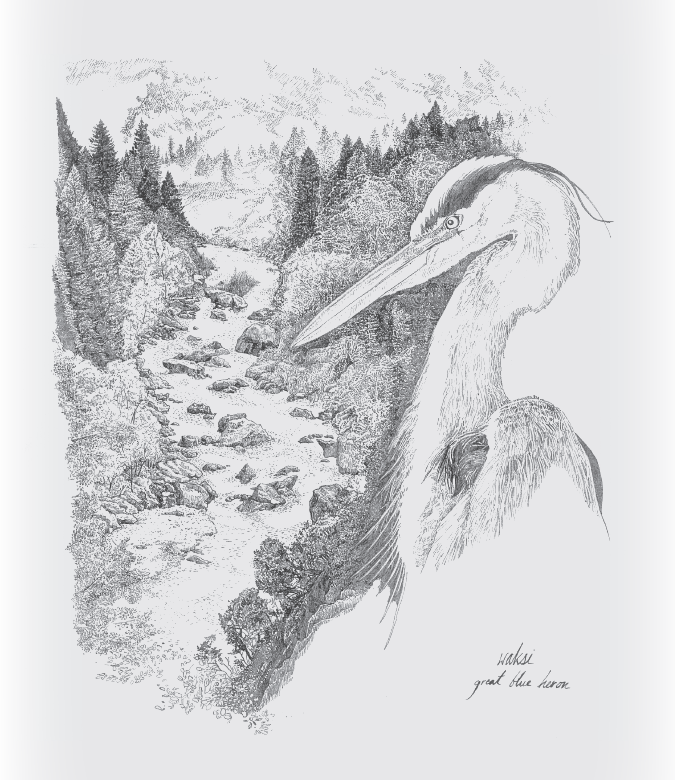
I wrote What Came West in a 1959 Dalton travel trailer on my friend's land in Deer Creek. I would look out one morning and see a mountain lion walk past my window. Just an incredible thing to see. This sweep of the tail…so huge and beautiful. I'd see bear. A heron flew up and down the creek every day, which makes its way into the book. I kept a notebook of anything I happened to see that day. Oftentimes, I'd be living out there in the trailer for two, three, four days at a time. Out there at night, jumping in the creek to wash off. All those things worked their way into the feeling of the book, allowed me to stay in that zone. I hadn't written much about the Mountain West. I'd always been interested in it. I grew up with my dad and brother traveling around the country most summers. My dad’s a professor, so he had summers off. We'd drive around the country and always be aiming West. A backpacking trip out in the Rockies or the Sierras, the Cascades.
When I moved out here to be with my wife, I immediately just fell in love with the natural world itself. But the dramatic impetus for the book was this realization of how quickly things had changed because of the Gold Rush. It's still a beautiful place, but you see scars all over. Obviously, the Native American population was decimated. The population of the Nisenan ranged from somewhere between 7,000 and 10,000 originally. A few years into the Gold Rush, they were down to about 500. Same goes for the animal population. Grizzly was eradicated. A lot of animals were pushed out. It all happened so quickly. There was something seismic and dramatic in that. I hadn't read much about the world before, so it became, for me, a novel about loss. About sudden loss. This then led me to thinking about a character for whom that loss is greatest. Of course, the obvious place to go would be the indigenous populations, but I didn't feel I could write that story.
I started to think, What other kind of person would be affected to the largest extent?
That's how I landed on Silas and why that neurodivergence you talk about becomes so important. Without that, there's a way you kind of shrug at him and say, Hey dude, like…buck up. Go somewhere else, right? But luckily, one of the great things that's happened in the last few decades is a greater understanding of neurodivergence and a greater empathy for it, where we don’t detract from someone’s humanity because of their neurodivergence.
From the specifics you're giving and the passion you have for this region, What Came West is supposed to steep readers in a place that’s—nominally—still here, but no longer in a pre-human state.
Right. That world is lost.
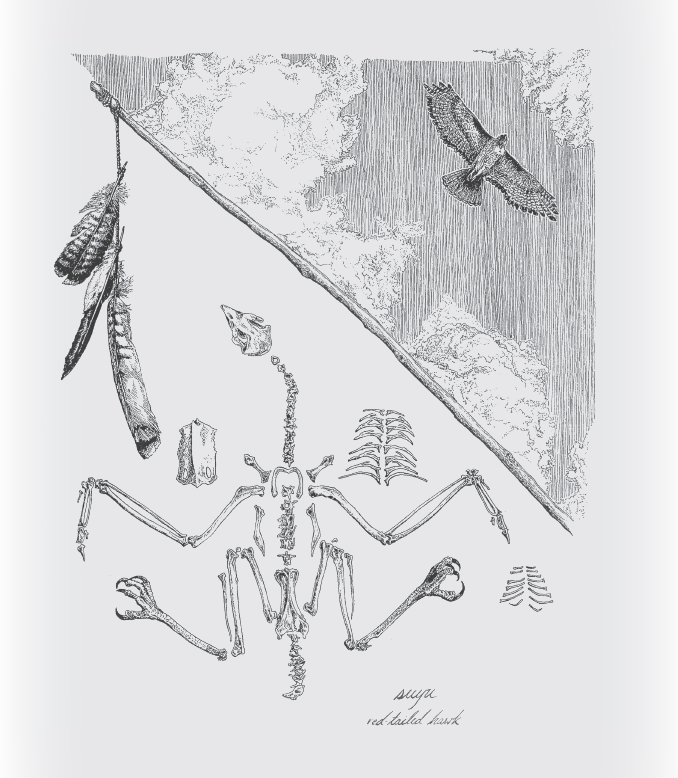
I draw a parallel in Silas’s character rooted in the concept of the Übermensch, but with a more positive, less colonial spin. If you remember Judge Holden in Blood Meridian, as he documents intricate pictures and linguistics in his notebook, he says, Whatever in creation exists without my knowledge exists without my consent. Because Silas is a gifted illustrator detailing his bond with nature, the difference I see between him and Holden is that he wants to preserve and record this land as a means of paying tribute to that land.
That's a key difference, right? It's less a means of control. The Judge is claiming dominance and Silas is saying he's just in love with it and wants to preserve it in some way and pass it along. His need to illustrate, to me, is less about him looking at the things than about the things themselves. For the most part, he’s absent from those illustrations. But it is interesting what you’re pointing out. I never would have thought of connecting him to the Judge, but there is a connection. [In Silas] there is this kind of strength of the individual, the dominance of the individual, that kind of thrust seen in manifest destiny. It’s very much heightened in him. That's not necessarily something I had thought about from that angle.
Speaking of Silas’s illustrations, you did all the drawings in the book, correct?
Yeah, those are mine. I spent way, way, way too much time on them, but it was fun.
Did you have an illustrative background before this? While writing, did you feel the need to record what you were seeing, and it just so happened to feed into the novel and Silas's character?
Thanks for bringing them up. They're a big part of the book for me. It's funny how it’s so tangled in my background, which is probably why they're so important.
I thought I'd be a painter or an illustrator when I was in high school. I always loved visual art. Photography, drawing, painting, all that. My undergraduate degree was in filmmaking as a way of trying to bring together love of narrative and love of visual. Ever since that happened, I've been tempted to work some kind of visual element into my stories. I love [W.G.] Sebald's use of photographs. You know, there've been writers who have affected me recently like Northwoods by Daniel Mason. I love it when writers do that. I'm fascinated by having an image that speaks to what's happening in the story, but working in a different way. The drawings in my book work as section breaks, but I also wanted them to be a representation of Silas you can’t quite put into words. Toward the end of the book, they literally stand in for his presence.
Regarding the way in which you wrote this book, every sentence unveils another layer to the landscape, the characters, and the unrelenting cruelty of man in the wilderness. The style, however, makes you trudge through. You need to slow down to take in every word. Do you think this approach is a response to the modern-day demand of satiating shortened attention spans?
If it was, it was unconscious. When I'm writing, I try my damnedest not to think about audience. In the editing process, you wind up thinking about that more. For instance, with this book, the only way I am thinking about audience is thinking about challenging myself as a reader. I'm interested in having a reader engage. It's how I write. I’m about to turn fifty, and it's like, Look man, this is just how I write. I don't want to be slowing the book down to the extent where the narrative isn't still propulsive. Finding that balance becomes really, really important. So sometimes it's reining in some of my impulses or recognizing where they've led me astray.
In my opinion, given the period, it fits on a functional, historical, and tonal level. In the nineteenth century, for those who could read, it was the only thing to do. People wanted a James Fenimore Cooper-esque Last of the Mohicans epic, where readers were awash in that world. I think your approach in What Came West is a callback to those days.
I mean, I think we are craving that now, a kind of immersive experience. I do. It's so hard to work that into your life. And there is something almost anachronistic about it. I also [think people want] a closeness to the natural world, the role of the natural world in their lives. I wanted to make sure that was present in the book.
I look at Cormac McCarthy and Ron Hanson and Annie Proulx. You know, their sentence construction, the level of specificity…of seeing…it’s just out of this world. And every bit of what I’m trying to do, they’re doing successfully without discounting or detracting from narrative. For me, that’s the goal, because I do believe in narrative, and I never want to dilute it with the language itself. I came at the book through an interest in the emotional experiences surrounding a seismic event that happened to the natural world and the feelings of shame and guilt. Then came working a story into those elements. That’s what gets me going as a writer. Once I'm like, Okay…I know I want to be swimming in these waters. Then I ask what story within these concerns is going to heighten those concerns as much as possible and make us feel as strongly as possible.
The novel doesn't really come alive, to me, until it's attached to story, but that story is meaningless unless it comes out of those larger concerns.
My last question will be about how your emotions propel you to write, draft, edit, revise, throw shit across the room. Because it wasn't just loss and grief echoing throughout the cavern of this novel. It was anger.
Dude, I knew you were going there. You're dead right.
It was like an ember turning over and over. How did anger act as a propulsive emotion that kept you fiddling away at the novel?
I don't think, consciously, it was. But I definitely agree [the anger’s] in there. It’s the hardest thing about this book. Probably the hardest thing about any book I've written—or worth writing—is knowing that what's driving me is my own shit, right? It's my own concerns. It's my own troubles.
They pale in comparison to the ones you're giving the characters, but it’s where the seed comes from. I was really struggling when I began this book. I'd been trying to write another novel [after Great Glass Sea], a couple hundred pages into it. Spent a couple of years picking away at it. I'd gone from a life where I could really devote almost entirely to writing, to one where I suddenly had a family. I had a stepdaughter. I had a son who was turning three. I was married. I was really struggling to find the appropriate place for writing in my life and found a connection with Silas's neurodivergence and his struggles as a new father. I'm not quite where he is, but some of his struggles probably come from my struggles.
I’d found peace in my own way, which wasn’t being a hermit, but in my writing. I’d found a place where I could exist and do so happily.
Then suddenly I was trying to live in a world that included my son and stepdaughter, whom I love more than anything on earth, and my wife, whom I also love more than anything on earth. My family was in conflict with writing. I think there was a real desperation and an anger that informed the feeling in the book. Of course, that’s about writing but, in its own sense, writing as I knew it was a world taken from me. A comfortable way of existing that no longer works. It felt like a rupture, coupled with the initial feeling of not understanding how to make it all work. While quite different from what Silas is experiencing, I think it leads to an undercurrent of emotional truth. I think that’s what you're picking up on.
Like I said, I don't think it was conscious, but whatever upsetness I'm going through, that's a personal thing, and it doesn't matter in the wider world, right? But what happens is that feeling gives rise to Silas, and I find a place in his story where that feeling can then be directed toward the issues of the wider world. Hopefully, that matters to the reader and to people thinking about history. The anger may come from a personal struggle. But by transmuting it into Silas's struggle, I then relate it to a larger scope of history. What happens to me in the writing process is I begin to understand his character and feel angry and upset at the larger issues of our role as descendants of people who came to a land and enacted this destruction. Though they come from different places, hopefully the emotion helps add weight to a broader context.