“It ends up being funny but not on purpose” — an Interview with Shampoooty
There is a balance to making something shocking. How do you keep people’s attention after the initial moment of excitement wears off? Oftentimes what we end up with some of today’s provocateurs is a hollow feeling: a recognition that there is nothing to comprehend beyond the initial moment of shock. This isn’t to say that every piece needs to be profound or contain some hidden meaning underneath its initial visual attractiveness. Visual art exists to arrest our thoughts and senses and transport us to a place beyond our normal day to day thinking – including our higher conceptual thinking. The hollow feeling I am referring to comes from a different type of disappointment. It comes from realizing that what you are looking at was made not because the artist was interested in externalizing an idea or world that has been existing in unarticulated form inside them for however long; but, instead, the artist made the thing in question for attention.
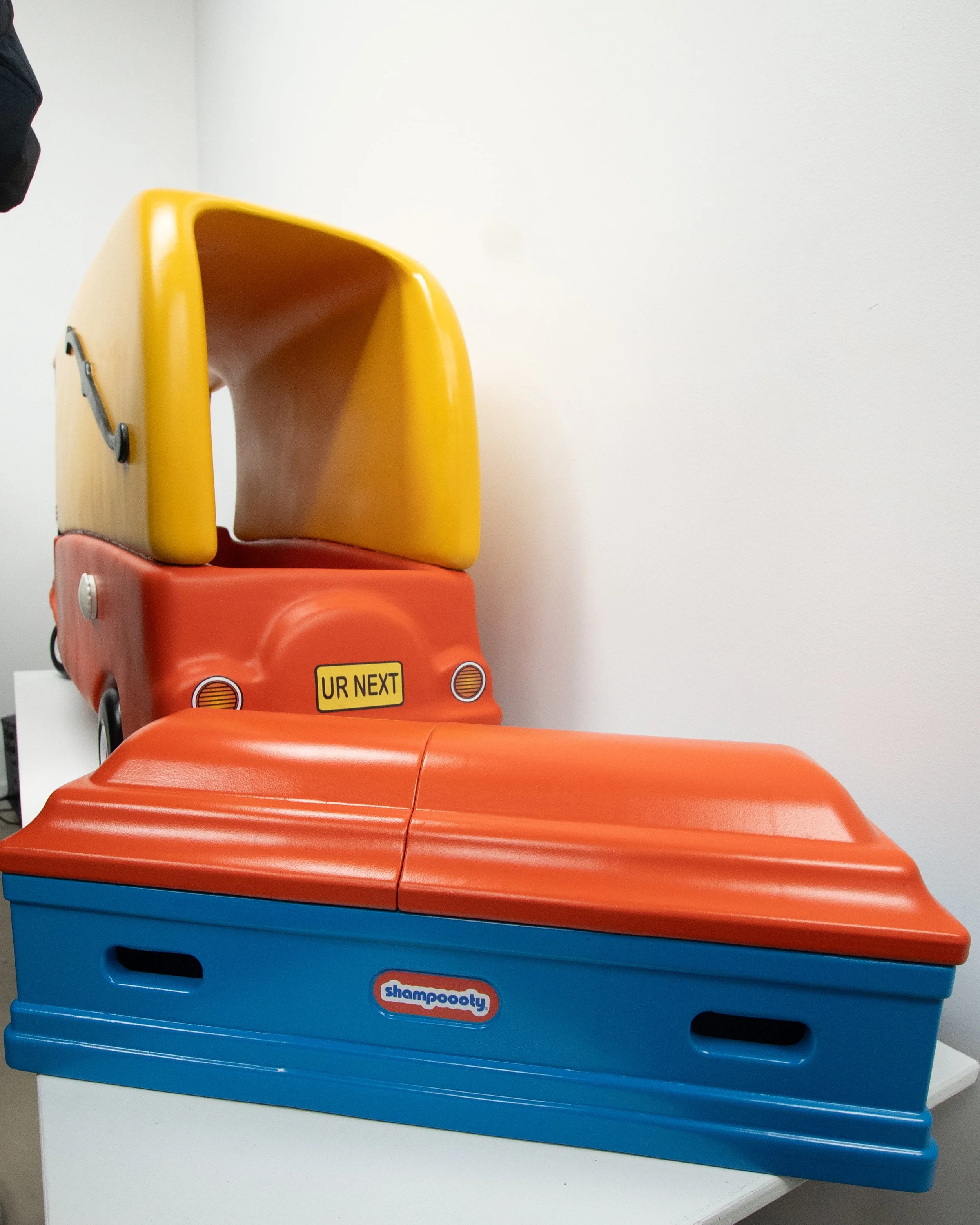
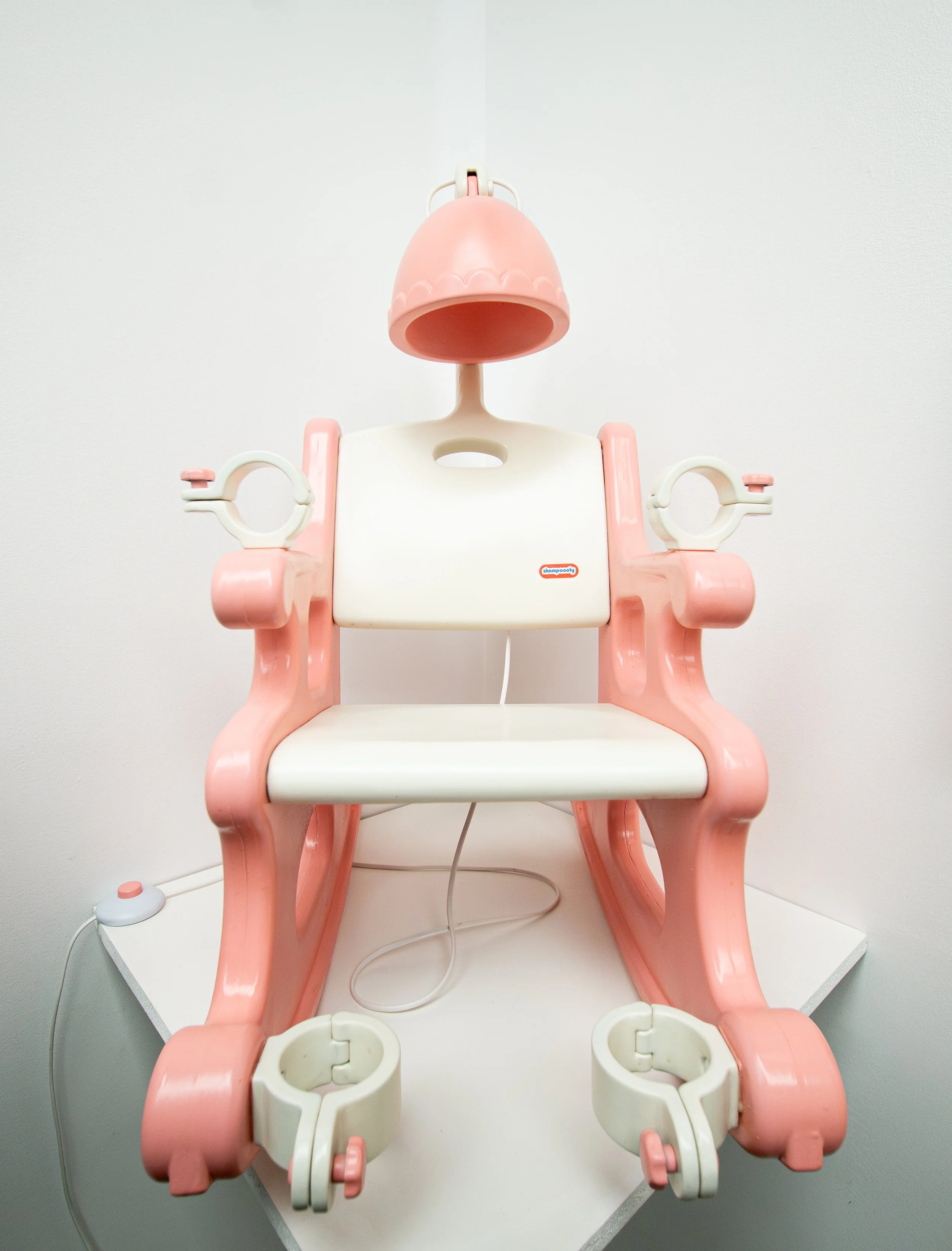
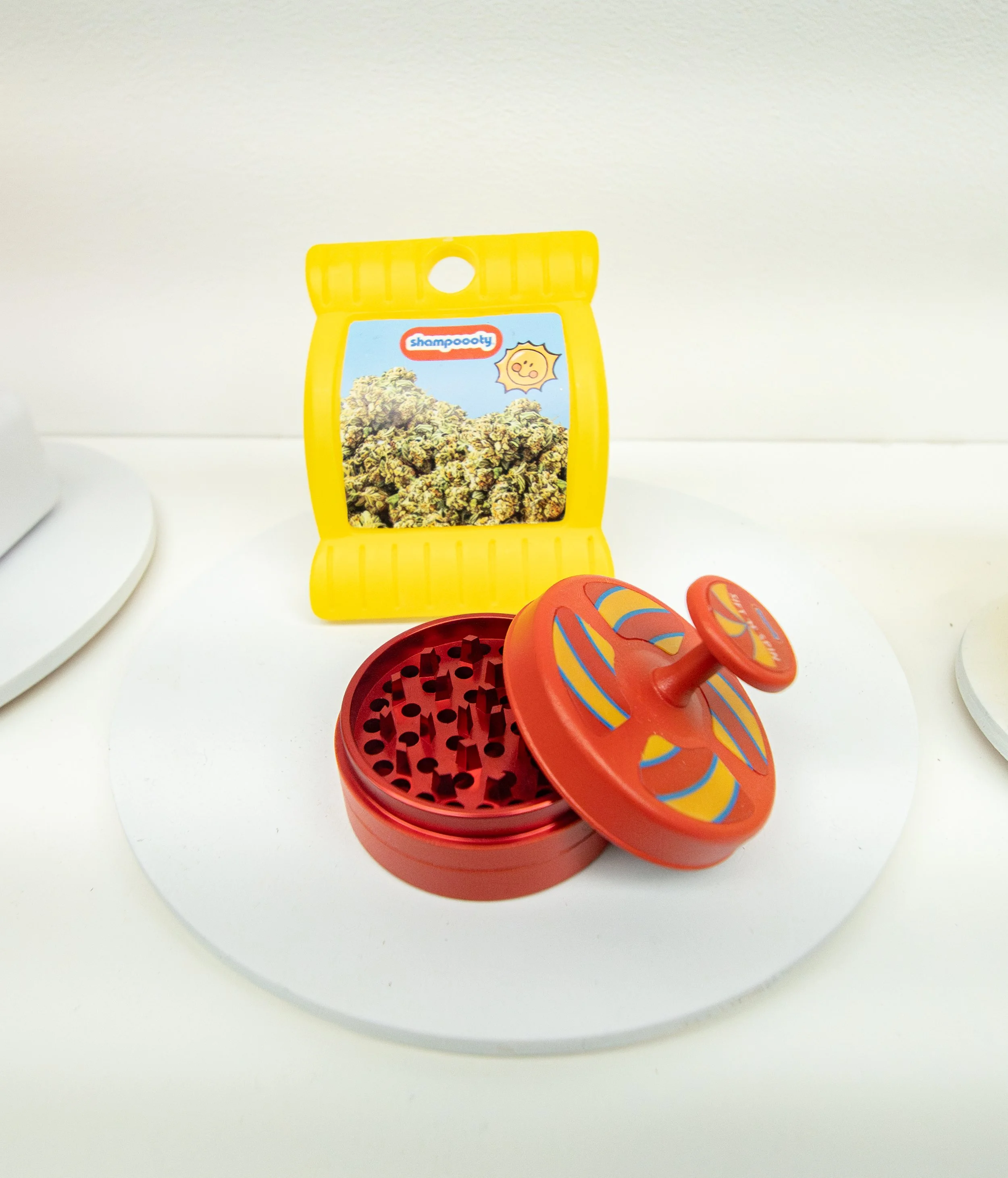
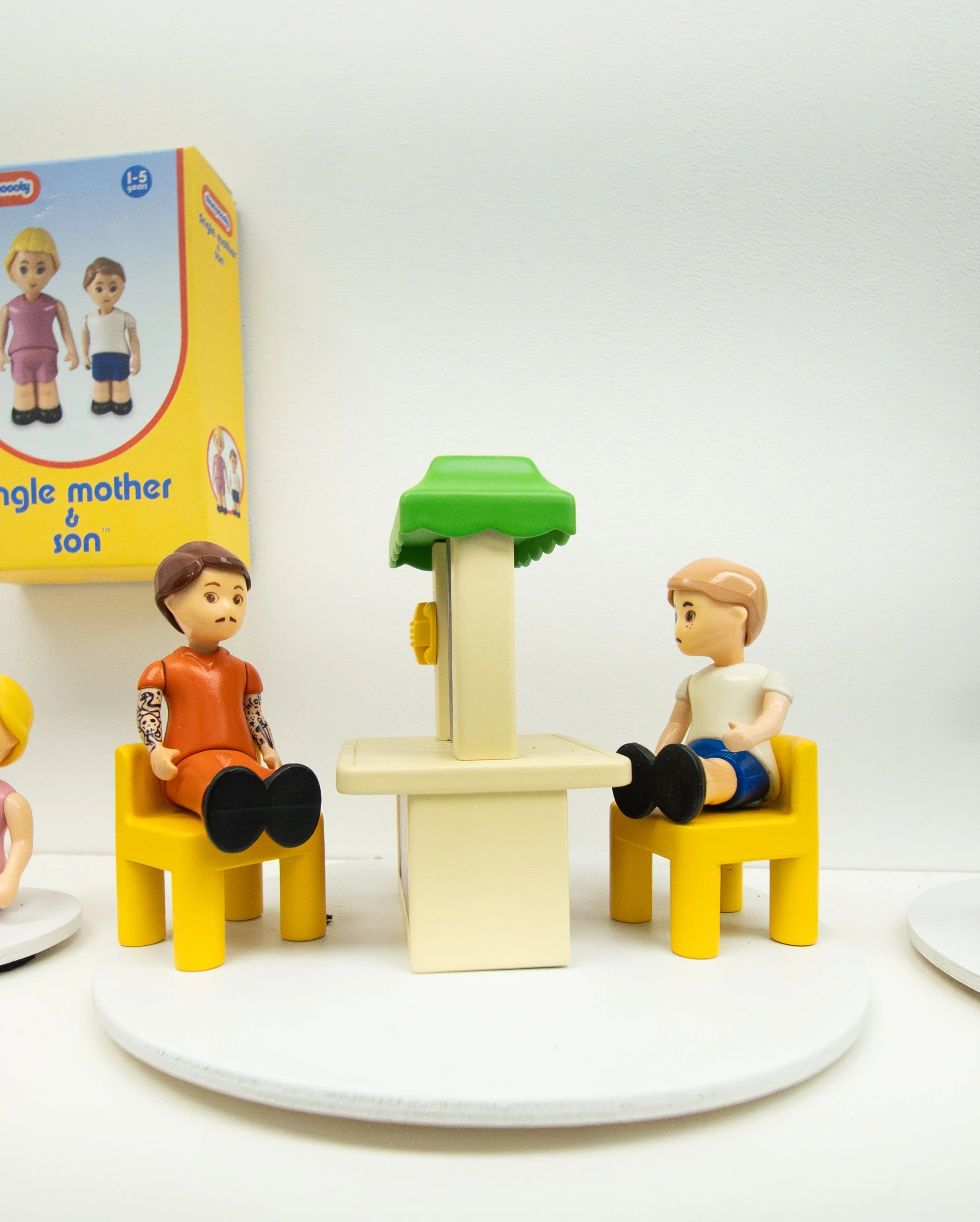
Shampoooty’s work, as he told me himself, can be easy to write off upon initial viewing, especially if that viewing occurs in the more than likely venue of instagram. Some of his pieces are more pure gag than others and if you’re relying on the instagram algorithm, which is based on how much attention something is receiving, you’re more than likely going to be served something like the Fisher Price bong. But if you take the time to look into more of his work you’ll come to see that even the bong has meaning in the greater context of the world he’s created. Kids Toys, Adult Issues is the tagline all his work lives under, and this is an idea he takes very seriously. What if you were able to look at the pain and suffering of an adult’s world through the technicolor of childhood cognition? If you mix the nostalgia provoked by the bright soft edges of a Fisher Price toy with the artifacts of atrocity and self-mutilation, what do you get? What does that feel like?
I was able to talk to Shampoooty about some of these ideas as well as the distinct type of story telling he is after in his work.
Where’s the name Shampoooty come from?
It was my childhood friend’s first word. And I just kept using it for screen names and what not. No one ever had it so you didn’t have to add numbers or anything afterward and it just stuck.
What’s your background as an artist? How did you end up making perverse Fisher-Price toys?
My background isn’t really in art. I didn’t go to art school or anything. I’ve just always been into creating things. I started off in interactive tech working mostly with robotics, automation, and physical computing. Then I got a job doing interactive installations and sculptures for museums. Then I was making medical training devices and then as my job sort of veered toward the more artistic side I had to practice more organic 3D modeling. And Shampoooty was basically the result of me committing to a hundred days of practicing organic 3D sculpting for an hour a day and then posting. And all under the theme of Kids Toys, Adult Issues. It’s definitely not what I was trained in. But then it just caught on. People liked it.
I wanted to ask about finding a sweet spot in making things that are shocking or vulgar in a way that doesn’t alienate your viewer while still maintaining its edge.
Yeah that’s the key point. How do you get someone to look at it and have them not realize what it is for a beat? They have to sit with it and then they make an interpretation of what they think it is. And I’ve had people tell me that: that it’s nice that you see it and you have to take your time to think. And then you eventually feel special by knowing what it is. Unless there’s some blatant writing on it. Which I try to avoid using words but sometimes you have to.
Do you think the use of nostalgia has attracted a lot of people to your stuff?
For me this all comes from connecting pieces of my childhood to the vast array of shit adults deal with–connecting kids toys with death, addiction, sexuality, or capital punishment, or what have you. But I’ve found that there are seasons to what people are into. Or seasons that make people more nostalgic and thus maybe more interested in my stuff. After covid settled there was this real nostalgia kick. I think it just came from people being inside for so long. But I also see it happen around a school calendar. Like around the time that kids go back to school I see people getting excited. But who knows? JNCO jeans are in now.
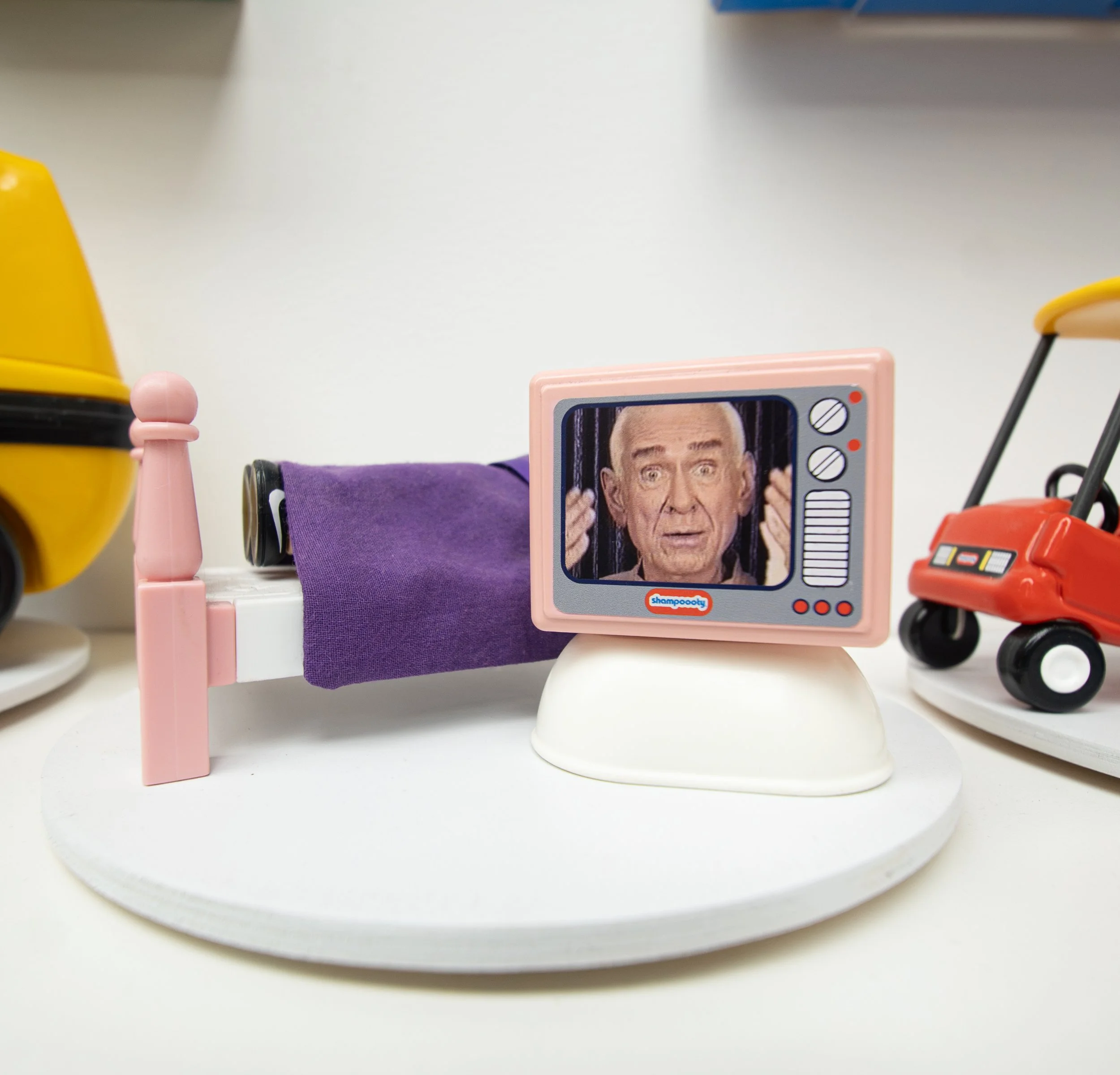
There’s this idea with nostalgia that I think your pieces also get after a little. Like dark nostalgia. I think people often understand nostalgia as a purely positive experience but what I feel when I look at some of your stuff feels a little more truthful to the muddiness of past recall. Whether it be something like sexual adolescence and the associated terror of it or your first encounters with violence or cruelty. These things all exist alongside your nostalgia and I think texture it. And that’s what I feel when I look at your work.
That’s great. Or maybe it’s great that you see it from that perspective not because that perspective is great. But I’ve had a lot of people say something similar. Where I’m coming from is what if toys weren’t designed to be played with? And what if pain and suffering were considered through them? Hopefully you don’t have to experience pain and suffering as a child but you inevitably will have to learn about it at some point. And I think the work is in conversation with that learning process. I’ve had a grief counselor for terminally ill children reach out to me for a hearse so the kids could rehearse their funeral. That helps them grieve. But sandwiching innocence with the absurdity of life is what’s going on.
Makes me think of Edvard Munch a little bit. The blending of sentimentality or nostalgia with absurdity and terror.
It’s nice to have found a field in which I have a good juxtaposition to frame things with. Like the hearse. A hearse doesn’t have to be black. It can be bright and warm and soft and comforting. How do you make these things comforting and childlike so that when people encounter them they will immediately walk through but eventually then really see them? You sort of trap them in a place a little bit. Not intentionally. But you do.
I was talking to Ben Gore who introduced me to your work through his book. And he was talking about his attraction to sculpture having to do with meeting a piece in your own world. That sculpture asserts itself to you when you encounter it. I was wondering what you thought about that.
A: I think that you have to put people in a situation where they’re second guessing. Like how do I get them to enter into this thing I want by just looking at an object? How do you make a comic strip with one frame and it tells a whole story? That’s what I’m after. I’m trying to make an object that tells a whole story in one frame. But that’s hard to make happen for a person. It more than likely requires them to engage with multiple pieces of mine to get to that place. Like if they just see the bong by itself they’ll just think what I’m doing is a stupid joke and not understand that although it’s this product that has utility and sells well it’s still in line with this larger line of thought. So ideally they see one and then another and it queues them into the language I’m trying to create. But it requires them to see a thing, think one thing, and then second guess that thing, and not be pushed away by that. And then I think that one frame storytelling can take place.
Have you received any backlash or negative responses to your work?
In the beginning, yeah. Or if something really blows up online and the people who start encountering the stuff foolishly believe what I was doing is true. They’ll see one post and comment something like “Why are you making an ankle monitor for children? This guy should be locked up!” And I can tell they just haven’t seen anything else I’ve made. But that stuff never really bothers me. I feel bad for them because I didn’t mean to ragebait them. I was just doing my shit.
But more often than not the criticism is something like “Why does it cost $100 for your toy?” And it’s hard to tell them that I’m not Target. I have to go out of my pocket and I’m not making a lot of these. Because this shit costs a lot of money for a small volume. And I don’t respond to those really. But as the following has grown I have gained a pretty loyal group of people that will call those people out online so I don’t really have to. I feel like I have an army that weeds out the bad ones. And if someone is pretty persistent or heavily negative I just block them. But it’s not that often these days.
How often do you display your work in person?
Come to 52 Henry Street on January 14th. I’ll have like fifty different sculptures there.
Well there we go. Continuing with response and backlash I was also curious about how people respond to it in the art world. Have you found anyone putting their nose up or anything like that?
I don’t think so. Like snooty about it?
Or maybe just dismissive. I think a difficult part of making things have large elements of humor in them is getting people to also treat them as contemplative.
Oh it’s not meant to be funny. I’ve been in the hospital for suicide. I’ve been arrested and in jail. Dealt with addiction. This is my life. I don’t think they would be able to get snooty about that. And if you have the luxury to poo poo something like this you’re living in a different reality and I wouldn’t take those people seriously.
Yeah but something like the guillotine basketball hoop is pretty funny.
Yeah. There’s funny elements but that’s not the intention. Or like the funny part comes after. Where the piece starts for me is thinking that there was a time that there was a device to cut fuckers’ heads off. And as a kid you just want a capri sun and that is existing in the same real world that the guillotine existed in. It ends up being funny but not on purpose.
I know what you’re saying. I’m thinking about impetus versus craft. I talk to our arts editor Frazer Robertson about this pretty often. He makes things that can come off as absurd or like so crass they kind of make you chuckle but at the same time he’s sincerely contemplating mass death or agony and asking you to sincerely do the same. There’s this provocative thing inside him that makes him want to poke people and it often informs how he goes about making something but it’s not all that he wants out of it. The thing that carries it though is not the provocation. It’s a deeper form of craft. Like you wouldn’t spend all your time making this stuff if all you wanted to do was piss people off. There are simply easier ways to do that.
Right. The work is meant to turn a key in people and make them be a little more lighthearted about what they’re seeing but that’s not all. Oftentimes people get really excited by their emotions and what they believe and I try to soften that a little bit to make it approachable. Make it more manageable for people. And if that final product gives them a little giggle inside that’s okay. It’s good to invoke a little sunshine especially if it’s a darker topic. Like having them slip on a banana peel but when they fall it’s into a birthday party. I don’t know, I just came up with that one. Or it’s like a gut punch with a plastic smile. Someone described it that way before but I can’t remember his name.
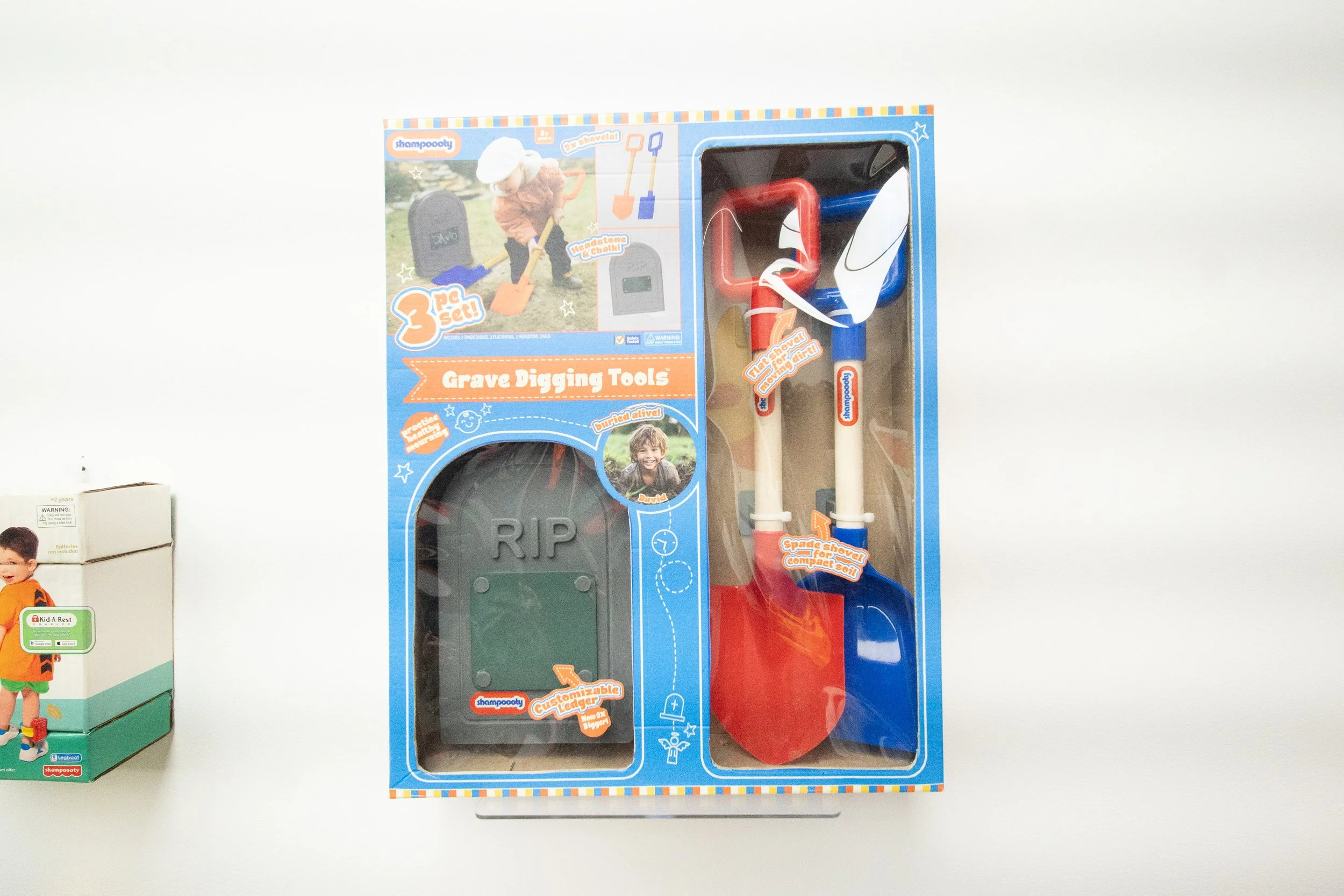
I think part of making things that deal with dark stuff in general is you can’t bludgeon people with it. You have to provide levity. There needs to be space to breathe and think. That’s how you reach people. Like back to the guillotine. For us it’s a relic of history and when you see it you just think it’s some archaic thing. But if you can place it into our world maybe you can activate some type of empathy or sympathy receptor to actually think about what it would be like to get your head cut off by the state in front of all your friends.
Especially as a kid. Like get ready man this is what they do in the real world. We still electrocute people. Things are still that archaic.
And I want to communicate to people so they think about these things. That’s what I’m doing. My goal is to communicate to humans about what is to be one. For Shampoooty that’s what’s going on. It’s a way to talk about things and a way to deal with my own pain. But without a harsh opinion. It’s just a photo. It’s just a sculpture. It’s just one image. And through that I’m attempting to achieve a throughline.
How I achieve that varies. Think about volleyball. Like there’s the bump set, spike, right? Three different moves but all towards the same thing. And so when I’m attempting to achieve this throughline I know sometimes I can’t approach it the same way. There have to be alternatives. I have to make decisions that aren’t necessarily my go to but they work better with the throughline.
I was thinking about working from within a developed and expected style. I know you’ve worked through a lot of different mediums and styles but Shampoooty seems to be one with a lot of support around it and thus probably a good amount of pressure to keep making things in that style. Is there anything you do to keep the process fresh for yourself?
There’s a sense of striking while the iron’s hot. People being into it has been energizing. For the first year of Shampoooty I could just find idea after idea after idea off that energy. And then the second year became a different thing. It was then about figuring out how to get it mass produced. Completely different focus. Months and months of working with manufacturers, box designer, injection moulding, compression moulding, learning how to design the files properly, all these different things. And then there’s the business stuff. Learning marketing and everything else. And then making full sized sculptures and having them shown in galleries that’s a whole different world too. So yes I’m making things with the same idea infrastructure but the experience it has created for me is constantly something new.
It’s interesting, the thing you see on instagram is the center or the nucleus but it has all these other branches. And when you encounter the center I’m typically off in one of the branches doing something else. I come back to and build up the center of course but I’m always jumping around working on the outer branches as well. Because I want it to grow and that’s how you grow it.
I think about that all the time. The lag between the initial creative process and the point at which someone can receive something. Often those two points are so far away from one another. People talk about the art piece being disconnected from the art maker – like once the piece is out in the world it is no longer owned by the maker. Except you’ll be at that gallery next week and people will be asking you about your work and you’ll have to sort of recall where your head was even if it was a year or more that you were really in it and thinking about it. Does that ever trip you up?
The whole Shampoooty thing was like a freight train. Once I made the first image in this style – which was the hearse kid’s toy car – they just kept coming. The hearse had been in my head for years but I just never did anything with it besides giggle about it here and there because I didn’t know how to make it. But eventually my career changed and led me down this path where I could actually go about making it and so I did. And then instantly after it was done I just had two new ideas that I felt like I needed to make. I felt three could be a collection and could be displayed and those two other ideas just came really quickly. And after that it just felt like a vomit of ideas. I could think of five a day. It was this feeling of opening a world.
I think a lot of concepts don’t offer that but this one did. A lot of my previous concepts would just end after I completed them. For example I did a series of instruments. When I did that it wasn’t like I was cracking open a world. It was just like honing in on a particular project. But the Shampoooty stuff just has never ended. The field of ideas is just so massive.
I had a professor in school tell me that all artists only get one idea. And you spend your whole life working towards it consciously or unconsciously.
Yeah I mean I didn’t mean to become an artist. I was just making stuff. And so maybe as an artist you guys only have one idea but as a creator I have a lot. One fucking idea? Whoever said that just has a lot less ADHD and is a lot less curious than someone I would maybe look up to.
I see what you mean of course. They have the one style. Or the one way to connect. Van Gogh or comic strip writers or whatever. Spending their whole lives mastering and perfecting this mode of making. And I think about that a lot. Would I rather make a bunch of different things or hone in on one thing and get great at it. And for Shampoooty it’s something I just want to take care of as much as I can. And develop it as much as I can. Until it’s time to flourish on its own. And I can let it go and I can go work on something else and come back to it later. But there is a responsibility when you have something like this. To make it as good as possible. And it’s not like it’s a one trick pony but it is a pony. And it’s going to stay the same pony it’s whole life. So you gotta train it to do a lot of tricks.
And there is maybe something to be said for the stability within finding a concept like this. Shampoooty definitely helps me stay stable. I’m bi-polar and for the past years doing Shampoooty I’ve been very stable.
When you find a mode of creating like that it does feel like you’ve found some type of home for yourself. A place from which you can make sense of things.
It wasn’t intentional either. I wasn’t seeking this out and I have no ego behind it. I’m not thinking Ah I’m an artist. This is my fucking shit. It’s an idea and I look at a way where I’m like just get it out there. It doesn’t need to be perfect. Most of my posts that you see online are just one hour of 3D modeling, a ten minute render, and then a post. No more than that. And I’d rather do it like that and let the river flow than belaboring over small details and trying to be so heady about everything. I’m sort of thankful I didn’t go to art school for that reason because I feel like I would get caught up thinking about the underlying concepts or meaning or whatever. But you just have to let that go. I’m always thinking that your next great idea is waiting for you on the next corner but if you stop and think about it you’re not gonna get there. If you stop thinking and just keep walking it’ll be there hailing you like a taxi cab. Keep testing and trying and an idea will speak to you. If you have more than one idea.